No registered owners for this vehicle.
Model
Chassis No.
Engine No.
Year
Registration No.
Coach Builder
Body Name
Main Colour
Body Colour
Car originally sold to Hill and Boll Kingston, Yeovil. Sold 26.10.1905. Delivered to Hill and Boll’s premises at Yeovil on 09.02.06. Described as Exhibition Show Chassis.
Car sold to Kuwaiti owner c2001. Still in UK at P&A Wood until 2003. Sale price believed to be c£400k
From formal car to tomato wagon, and lone survivor: the story of 26355
by Tom Clarke (W.A.) ©2020
Of Henry Royce’s 105 cars before the immortal 40/50 h.p. (Silver Ghost) of 1906 there are now eight survivors. Three 2-cylinder 10 h.p. cars, one 3-cylinder 15 h.p. car, three 4-cylinder 20 h.p. cars, and one lone 30 h.p. 6-cylinder car. The latter is chassis number 26355 with an Australian history spanning 36 years. About fourteen of those early years in Australia have until now been a blank, but no longer!
Why is 26355 significant? Automobile engineers in the early years of the 20th century did not at first fully understand the problems that arose with in-line 6-cylinder engines after they first appeared in 1903. Suffice to say that Royce’s brilliance, by intuition and happenstance, grasped what was going on (specifically on 26355) and he was then able to resolve the serious problems of the 30 h.p. before moving on to design his superior 40/50 masterpiece. I’ll spare the reader a disquisition on matters surrounding vibration and crankshaft layout related to 6-cylinder issues.
Early history
Short chassis 26355 was sold in February 1906 to Col. John R. P. Goodden of Sherborne in Dorset. Nearby in Yeovil, Somerset, the coachbuilder Hill & Boll fitted a formal landaulette body. Goodden also owned Rolls-Royce 20 h.p. 26352 Hill & Boll tourer. But he seems to have cancelled his 26355 order, probably because of delays in its completion by Royce Ltd. during late 1905-early 1906. Instead the car was delivered to Goodden’s sister-in-law, the widow Mrs Alice Gertrude Tate (1862-1955, née Samuelson) of Plymouth, Devon, registered T-670. She also lived in Chelsea, London. Mrs Tate later sold it to a Mr Hewson of Eastbourne in Sussex who in turn sold it in 1910 to Sir John N. Barran Bt., M.P., of Ripon in Yorkshire. In April 1913 the car was with James B. Hunt of London and he finally parted with it in August 1920 by part-exchanging it for a new 40/50 h.p., chassis 19TW, a Cunard landaulette.
Picture 01: A Hill & Boll advertisement mentioning their Rolls-Royce agency and showing their coachwork on a 6-cylinder Napier. Like the 30 h.p. 26355 the Napier had its radiator far forward of the axle center line. (Western Gazette 8 Dec 1905 p.9)
Hunt was allowed ‘£50 as credit in respect of old 20 h.p. car’ (according to the sales record, i.e. his 30 h.p., not 20 h.p. as claimed). The Rolls-Royce Ltd. Sales Department in Conduit Street, London, would then have disposed of the old car into the general motor trade. It must still have had its original body at this point and thus could have been the 30 h.p. car advertised for £550 as ‘landaulette S32’ by dealer T.
H. Hudson of 38 Cranbourne Street, London W.C.2 in The Autocar for 21 August 1920. S32 was probably a part or casting number seen on the engine rather than a Scottish registration. In his advertisement in The Times shortly afterwards, 1 September, Hudson described the car as ‘one of the most astounding bargains that has ever been announced in these columns’. He went on to mention the CAV dynamo lighting now fitted but the price had already dropped to £475.
The 1919-20 period saw huge pent-up demand for cars. New chassis were hard to come by and it became hugely profitable to modernise and rebody prewar chassis. The lucky few who could get a new chassis often turned them around for a quick profit. Rolls-Royce chassis were particularly restricted because the British government took priority for 100 chassis needed as armoured cars in the new Iraq mandate. It took a while for things to settle down in the postwar boom and bust years.
Destined for Australia
When 26355 was rediscovered in South Australia in 1956 by the late Len Vigar (soon joined by Gavin Sandford-Morgan) little was known of its early years in Australia.
With the incredible emergence of two photographs this year showing the car as it was after its arrival in Australia as a 2-seater coupe, around 1922, we can begin to sketch out what happened after its last known sighting in England, 1920.
If 26355 was the car noted with T. H. Hudson in August 1920 then it is almost certain its antique body would have made a sale difficult. Rebodying was the obvious choice and quite cheap to do. It could therefore be the car listed in two advertisements a few months apart:
· The Autocar 9 March 1921 ‘Rolls-Royce 30 h.p. 2-str. coupe, dickey seat,
£300. Woolstencroft [sic], Vauxhall ’. Cuthbert Wolstencroft (1871-1942) ran a motor repair business here at 76 Queen’s Road (now renamed Queenstown Road), Vauxhall, London, with his son Cuthbert Reginald.
· The Motor 20 July 1921 ‘Rolls-Royce, £495 cash; 30hp, 6 cylinder, fitted 2 seater body, with sunken dickey, old chassis but mechanical condition, etc, A1, tax £28 10s p.a., paid to Sept 30th, near offer, or exchange for light car. Capt. Rogers, Cleve Hall, Champion Hill, [London] S.E., Brixton 2041.’
Again assuming the sequence, inflation and profiteering could explain the steep rise in price. William Paull Rogers (1839-1922) lived at ‘Cleve Hall’ (built 1807, demolished 2012), a grand residential boarding house, pleasure grounds, and entertainments estate in Dulwich where Rogers was the leaseholder and manager. He died in the spring of 1922 and the Hall passed to his widow and son. It is likely that it was actually the son, Capt. William Paull Jewill Rogers (1876-1972), who was speculating in 26355.
Now let’s fast forward to 2020 and the two previously-unseen images of the 26355 2- seater shown next. These were found in the albums of Charles Tait (1868-1933), the Australian impresario who lived at ‘Gnaroo’, 60 Clarendon Street, East Melbourne.
His brother James Nevin Tait lived in London so if Charles Tait is assumed to be the next owner then it’s not difficult to see how an arrangement could have been made with Rogers. But the sequence of ownership took a different turn, as will soon be seen.
Charles Tait was in the right place at the right time to be the possible next owner. He visited Britain during 1921-22, leaving Sydney 18 October 1921 on the S.S. Ormonde with his wife and two daughters, arriving in London on 1 December. Tait’s wife and daughters returned on the S.S. Ormonde, arriving at Fremantle on 1 June 1922. Tait himself stayed on in England, returning via the U.S. and came into Sydney on the S.S. Ventura on 11 August 1922. During this lengthy 10 month trip away he acquired theatre building plans in England and the U.S. and negotiated with artists and performers. Was 26355 with him in the hold of the ship? That can now be ruled out because new evidence shows that it was already a very recent arrival in Australia.
The front view shows the neat 2-seater body with immaculate paintwork, modern electric lighting (especially the sidelamps in cradles favoured by some English coachbuilders like Claude Grahame-White of Hendon and T. H. Gill of Paddington who specialised in rebodying work) and an early Silver Ghost radiator. The replacement taper bonnet (the original was parallel) doesn’t quite fit the scuttle, indicating this body might have come from another car.
Picture 02: The rebodied 1906 26355 in fine condition in the 1920s with a 1922 Victorian registration when owned by the Tait family. Modern lamps, Silver Ghost radiator, taper bonnet, all gave an up-to- date appearance. Royce upgraded the crankshaft of this car which could explain its resilience over so many years. (Courtesy of Nigel Tait)
Picture 03: The ca 1921 2-seater rebody on 1906 26355 when in Australia in the 1920s. In the Bentley manner a strap holds down the bonnet! (Courtesy of Nigel Tait)
The two men in the car do not look old enough to be Charles Tait aged around 56. In addition to his three daughters Cecil, Gwen, and Marie, Tait and his wife Elizabeth Veitch had a son, Geoffrey Ivan (always known as Ivan, 1900-84, salesman, married to Sheila Irwin of South Yarra February 1929). He seems a more likely explanation as driver. And his best friend Geoff Hindhaugh could be the passenger.
The real first owner in Australia
The number 33-024 on the car was at first thought to be South Australian, because the car was later re discovered there. In fact the surviving Victoria Police motor registration records have it with ‘F Watson, 332 Barkly St, St Kilda’ but with no engine number recorded (the usual identifier used by Australian authorities). Watson then emerges in The Age for 24 October 1922 with an advertisement:
‘Rolls Royce 37-50, single-seater, perfect condition, smart body, owner leaving for England. £590. Frank P. Watson, 332 Barkly St., St. Kilda. Phone, Windsor 5973’.
A 37-50 [sic] h.p.? There is no doubt the image of the car shows the 30 h.p. model because the track rod is in front of the axle (on the 40/50 it was behind). Even more evidence comes from the Australian Automobile Trade Journal, July 1922, listing 33- 024 with Watson as a 48 h.p.! Watson was slightly more honest in his advertisement, with his 30 h.p. now a ’37-50’. Occasionally ‘30/40’ might be used for the 30 h.p. because the output was about 37 h.p. But Watson over-egged his case by adding the 50 which only reinforces the idea that this car was made to be passed off as a later 40/50 h.p.
Watson clearly didn’t have the car long because it can only have come from England during late 1921 or early 1922. In fact Watson had not long before been in England, a First Class passenger on, you guessed it, the very same S.S. Ormonde voyage which arrived in London on 1 December 1921 with the Taits amongst the other passengers. There were 49 First Class passengers, making it more likely Watson could have met the Taits. Watson arrived back in Melbourne on the trusty S.S. Ormonde, 7 June 1922, and it must be likely 26355 really was in the hold of the ship this time! Just a few days later it was licensed as 33-024, and soon after that it was for sale.
Frank Pentland Watson (1887-1972) lived at 332C Barkly Street and described himself as a traveller, implying independent means but in fact he was a textile buyer for the Melbourne firm of Richard Allen & Sons. Did Tait Sr. buy the car from Watson as a gift to his son (Geoffrey) Ivan, just 22 years old, for missing out on the voyage to England? Watson himself yet again departed for England on 31 October, just a week after his advertisement, arriving on 13 December.
Ruination and recovery
Ivan Tait kept the car some while and possibly took it to S.A. By 1934 the car was very rundown, with lamps and screen removed, when Autocars Ltd. of 108 Gouger Street, Adelaide had it as a curio. Kept until around 1939 (perhaps a former trade- in?), it was used on veteran car rallies on 5 May 1934 and 21 March 1936 from Adelaide to Glenelg. Autocars Ltd. was founded in 1909, as the Murray Aunger Ltd. coachworks, before changing to its new name in 1917. Its particular strength was the Overland agency.
Picture 04: 26355 in Glenelg 21 March 1936. (Courtesy of the Sporting Car Club of S.A.)
Eventually in 1939 26355 passed from Autocars Ltd. to Albert Beaufort Fuss (1912- 84), an itinerant tomato farmer in Virginia, S.A., latterly with its body removed and most non-ferrous metal parts sold off. Which brings us back to the rediscovery in 1956.
Luckily we have recollections from David Vinall who, aged 13, and with his brother John, went with their father Laurie Vinall to inspect the wreck, accompanied by Gordon Haverland and his son Paul. Len Vigar led the group and probably made the arrangement with Fuss because it was Len who had first told his friends about the existence of the car. David recalls that it was a close run thing because Len had at first been inclined not to follow up the lead but a drink with Vinall Sr. and Haverland after a recent Veteran Car Section (S.C.C. of S.A.) meeting led him to pursue Fuss after all. Just as well he did because without that encouragement this Tutankhamun moment might have passed and the car lost forever.
Len asked Gavin Sandford-Morgan to join him in purchasing the car from Fuss and very soon they returned to collect it. More parts were found in sheds.
Pictures 05, 06: The lone survivor 26355 glimpsed on the Fuss tomato farm in 1956. (Courtesy of the late Gavin Sandford-Morgan)
Pictures 07, 08: 26355 being dragged out and loaded onto a flatbed in 1956, its tomato wagon days behind it. It was more complete than it looks. Gavin, always proper, is standing by the block and tackle and naturally wearing a jacket and tie for this operation. Far right is Len Vigar. (Courtesy of the late Gavin Sandford-Morgan)
In 1958, unable to restore the car, Gavin Sandford-Morgan and Len Vigar sold the car (with an option of return) to Stanley Sears in England for his lifetime. He completed a heroic restoration. In 1977 it was sold to a collector in Switzerland, then back to England for 1980-84, a U.S. collector 1984-87 and a further sale 1987. It is currently stored in England. This is a car that has been around the block a few times! No other Thirties have been discovered so it remains the lone survivor.
Picture 09: Author G. R. Neville Minchin on 26355 at Stanley Sears’s home in Sussex during the restoration in the early 1960s.
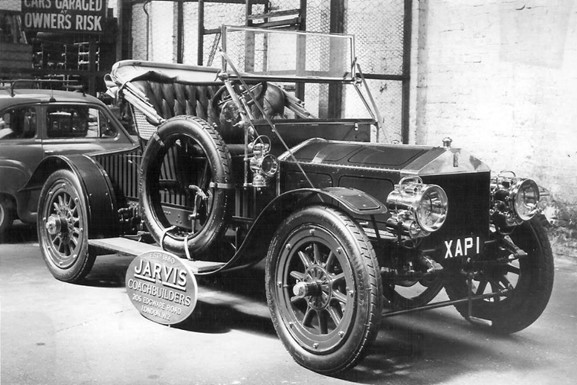
Picture 10: 26355 now completed in 1964 at the Jarvis coachworks in Paddington.
Acknowledgements: Nigel Tait for the historic ca 1922 images; Ivan Hoffmann, Sporting Car Club of S.A.; Graeme Jarrett (VCCA) and Philip Johnstone (AOMC) for registration records; David Vinall for recollections. My thanks to Bentley historian Tony Johns for other valuable assistance. See also Ian Irwin’s article in Praeclarum June 2017 p.7176-79.
No registered owners for this vehicle.